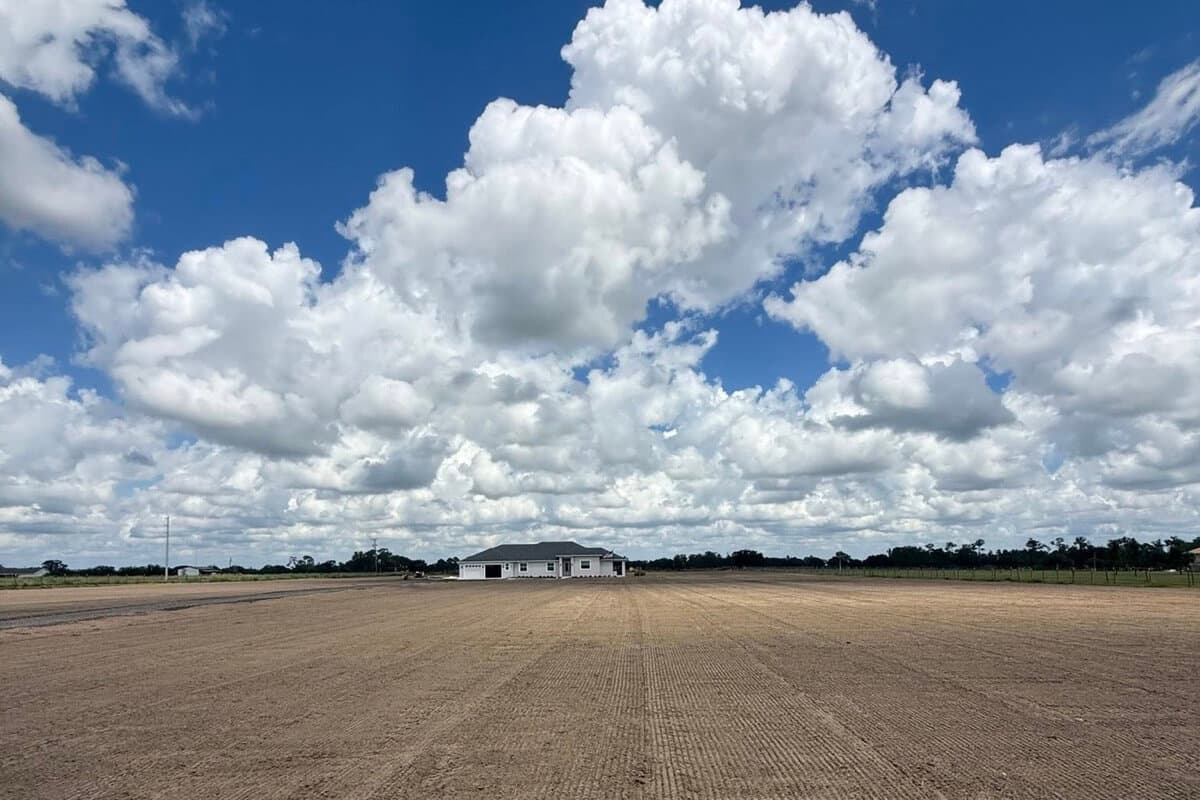
If you're planning to build in Polk County, the most important work happens before construction even begins. Site prep is the process of clearing, grading, and stabilizing your land so it's ready for construction — done correctly, it prevents drainage issues, foundation problems, delays, and costly rework later on.
A lot of people focus on the structure itself, but the reality is simple: if the land isn't properly prepared, everything built on top of it is at risk. This guide walks you through exactly what goes into getting your Polk County property build-ready.
What Site Prep Actually Includes
Site preparation is everything required to turn raw or overgrown land into a construction-ready site. It typically includes:
- Land clearing
- Tree, stump, and root removal
- Grading and leveling
- Drainage planning
- Building pad preparation
- Site access setup
Think of it as laying the groundwork — literally — for everything that follows.
Why Site Prep Matters in Polk County
Building in Polk County comes with its own challenges. You're often dealing with sandy soils, flat or uneven terrain, heavy rainfall and stormwater runoff, and overgrown vegetation or wooded lots.
Without proper site prep, these conditions can lead to:
- Water pooling around your foundation
- Soil shifting or settling
- Erosion problems
- Delays during construction
- Expensive corrections after the build starts
Good site prep doesn't just make construction easier — it protects your investment long-term.
Step 1: Land Clearing
The first step is removing anything that's in the way of your build: trees, brush, palmettos, dense vegetation, and organic debris. Depending on the property, this might involve forestry mulching, full land clearing with heavy equipment, or selective clearing that preserves certain trees.
Clearing the land lets you see the actual terrain, identify elevation changes, and plan grading and drainage properly. You can't properly prep land you can't fully see.
Step 2: Stump and Root Removal
After clearing, what's left underground is just as important as what was above it. Tree stumps, root systems, and buried organic material all need to come out.
Leaving them behind can cause:
- Soil collapse as material decays
- Voids under your foundation
- Uneven settling over time
For any permanent structure, this step is critical.
Step 3: Grading and Leveling
Once the land is cleared and cleaned, it needs to be shaped correctly. Precision grading involves leveling the ground, adjusting elevation, and creating slopes for drainage.
In Polk County, this step is essential. Even slight grading issues can cause standing water, poor runoff, or flooding near structures. Proper grading ensures water flows away from your build, the foundation sits on stable ground, and the property is usable and accessible.
Step 4: Drainage Planning
Drainage is one of the most overlooked parts of site prep — and one of the most important. Florida weather will expose poor drainage immediately.
Drainage solutions may include:
- Swales (shallow channels to direct water)
- Retention areas or ponds
- Proper slope away from structures
- Culverts for water flow paths
Without proper drainage, water collects around your foundation, soil erodes or shifts, and you may run into compliance issues later. Drainage is not optional — it's a core part of building the right way.
Step 5: Building Pad Preparation
Before construction begins, you need a stable surface to build on — the building pad. This involves compacting soil, bringing in fill dirt if needed, and creating a level, stable base.
A poorly prepared pad leads to foundation cracks, uneven settling, and structural problems. A properly built pad ensures even weight distribution, long-term stability, and a smoother construction process.
Step 6: Site Access and Entry
Before crews and equipment can start work, they need access to the property. That may involve clearing an entry path, installing a temporary or permanent driveway, and stabilizing the ground for heavy equipment. Without proper access, equipment damages the site, work gets delayed, and costs climb.
Step 7: Local Regulations and Considerations
In Lakeland and across Polk County, site prep involves more than physical work. Depending on your project, you may need to consider tree removal requirements, land development or alteration rules, stormwater and drainage compliance, and environmental factors.
The scope of your project determines what's required. Light clearing may be straightforward, but full site prep for construction often requires more planning — it's worth checking requirements early so you don't hit delays later.
Common Site Prep Scenarios in Polk County
New home construction: Full clearing, stump and root removal, grading and drainage, building pad prep.
Commercial projects: Large-scale clearing, heavy grading and leveling, engineered drainage systems, access roads.
Adding a shop or detached structure: Partial clearing, pad preparation, minor grading.
Vacant land cleanup: Bush hogging or light clearing, basic grading for usability.
The Biggest Mistake Property Owners Make
The most common issue is trying to cut corners on site prep. This leads to rework during construction, delays, and higher costs later. Fixing poor site prep is always more expensive than doing it right the first time.
How Long's Land Management Handles Site Prep
We take a full-scope approach to site prep — not just clearing land and leaving the rest to chance. We evaluate your end goal for the property, soil conditions and terrain, drainage and water flow, access and usability, and long-term stability.
Then we handle clearing, grading and leveling, drainage setup, building pad preparation, and site access so that when construction starts, your property is ready to go.
Not Sure What Your Land Needs?
Every property in Polk County is different. If you're not sure what needs to happen to get your land ready to build, we can walk the site and give you a clear plan. Reach out to Long's Land Management for a site evaluation — no guesswork, just a properly prepared foundation for your project.