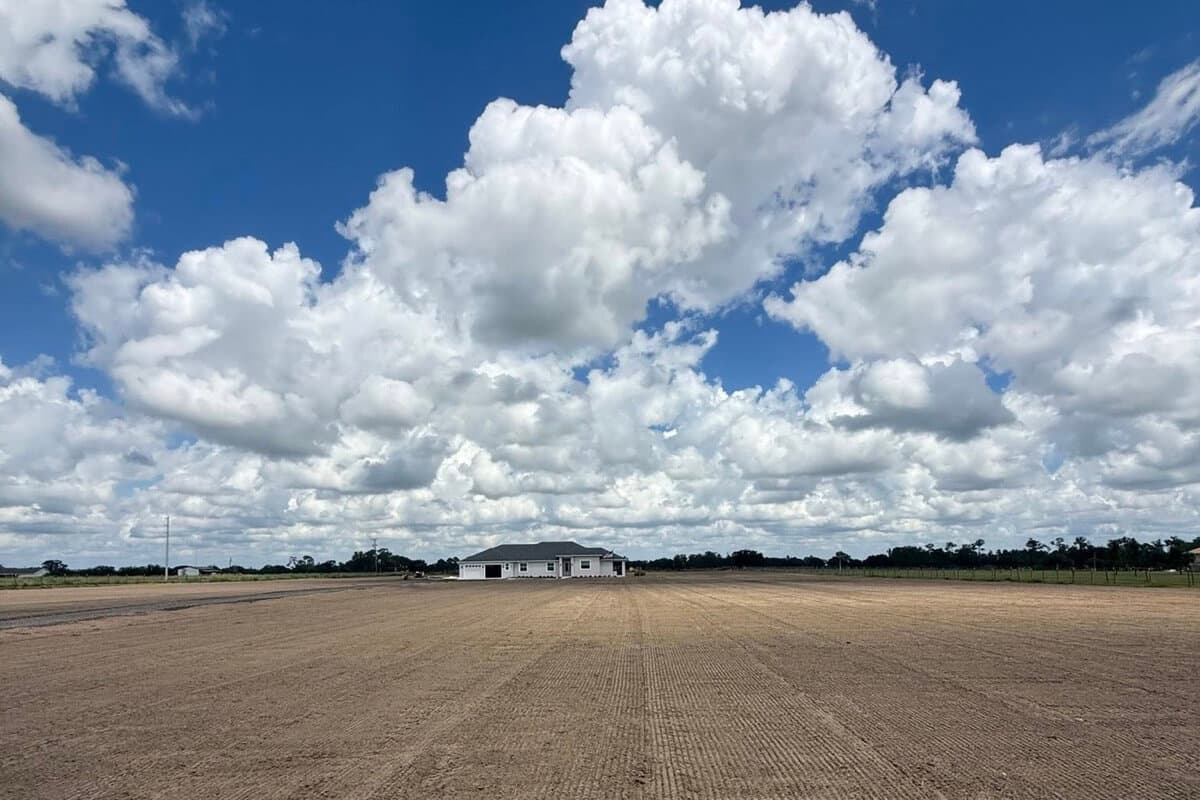
If you're planning to build on a piece of land, you've probably heard terms like site prep, land clearing, and grading thrown around — and wondered whether they're separate services or the same thing. The simple answer: site prep is the full process, and clearing and grading are two of the most important steps within it.
Understanding how these pieces fit together can save you time, money, and a lot of headaches once construction begins.
The Simple Breakdown
Before going deeper, here's the easiest way to understand it:
- Site prep = the full process of getting land ready to build
- Land clearing = removing trees, brush, and obstacles
- Grading = shaping the land for stability and drainage
Clearing removes what shouldn't be there. Grading shapes what remains into something usable. Site prep brings it all together into a build-ready site.
Step 1: Land Clearing — Creating a Clean Slate
Every project starts with clearing. This is where the property goes from overgrown, unusable, and hard to access to open, visible, and ready for planning.
Land clearing includes removing trees and brush, cutting down overgrowth and vegetation, eliminating debris, and opening up site access. Depending on the project, this can involve forestry mulching, full clearing with heavy equipment, or selective clearing that preserves certain trees.
Clearing exposes the land so the real work can begin. You can't properly grade or prep land until you can see the full layout, understand elevation changes, and identify drainage paths.
Step 2: Stump and Root Removal — What's Below the Surface
After clearing, the job isn't done. What's left underground matters just as much as what was above it. Stumps, root systems, and buried organic material all need to be handled.
If left in place, they can decay and create voids, cause soil collapse, and lead to uneven settling. This is one of the most common places people try to cut corners — and it almost always leads to problems later.
Step 3: Grading — Shaping the Land Correctly
Once the land is cleared and cleaned, precision grading is what transforms it into something usable. Grading involves leveling the land, adjusting elevation, and creating slopes for proper drainage.
In Florida — whether you're in Lakeland, Plant City, or anywhere across Central Florida — you're dealing with flat terrain, sandy soil, and heavy rain. Without proper grading, water pools around structures, soil shifts or erodes, and foundations get compromised.
Proper grading ensures water flows away from the build, the ground is stable, and the site is functional and accessible. Grading is what turns raw land into a controlled, usable surface.
Step 4: Drainage — The Hidden Factor That Ties It All Together
Clearing and grading set the stage — but drainage is what makes everything work long-term. Drainage includes swales to direct water, sloping away from structures, retention areas if needed, and managing natural water flow across the property.
Even perfectly graded land can fail if drainage isn't handled properly. Poor drainage leads to standing water, erosion, foundation issues, and long-term property damage. Drainage is built into grading, but it's worth thinking about as its own critical step.
Step 5: Building Pad — The Final Piece of Site Prep
Once clearing and grading are complete, the site still isn't fully ready. You need a stable base to actually build on — the building pad. This involves compacting soil, adding fill dirt if needed, and creating a level, stable surface.
A poorly prepared pad causes foundation cracks, uneven settling, and structural issues. A properly built pad ensures even weight distribution, long-term stability, and a smooth construction process.
How It All Works Together: Building a Home on a Vacant Lot
Here's what a typical project looks like from start to finish:
- Clearing — Remove trees, brush, and overgrowth; open up the property
- Root and stump removal — Eliminate underground obstacles to prevent future settling
- Grading — Level the site and create proper slope for drainage
- Drainage setup — Ensure water flows away from the home site
- Building pad — Create a compact, stable base for construction
At this point, the land is truly build-ready.
The Biggest Mistake People Make
The most common issue is thinking these steps are optional, or trying to skip ahead. For example:
- Clearing land but not grading it
- Grading without addressing drainage
- Skipping root removal to save money
This leads to delays during construction, costly fixes, and long-term structural problems. Each step builds on the last — skipping one weakens everything that follows.
Why These Services Should Be Planned Together
A lot of companies treat clearing, grading, and site prep as separate jobs. But they work best when planned and executed together.
When handled as one process:
- The land is shaped correctly from the start
- Drainage is built into the grading plan
- You avoid rework and duplicated costs
- The project moves faster and smoother
How Long's Land Management Handles the Full Process
At Long's Land Management, we don't just clear land and leave. We look at the entire project from start to finish — what you're building, the condition of the land, soil and drainage, access and layout, and long-term usability.
Then we handle land clearing, grading and leveling, drainage planning, and building pad preparation as one coordinated process. So when your builder shows up, the site is actually ready.
Not Sure Where to Start?
If you're looking at a piece of land and not sure what needs to happen first, you're not alone. Most property owners don't need to know every step — they just need the right plan.
Reach out to Long's Land Management for a walkthrough and recommendation. We'll help you understand what your land needs, what can be skipped, and what has to be done right the first time — no guesswork, just a clear path to getting your land ready to build.