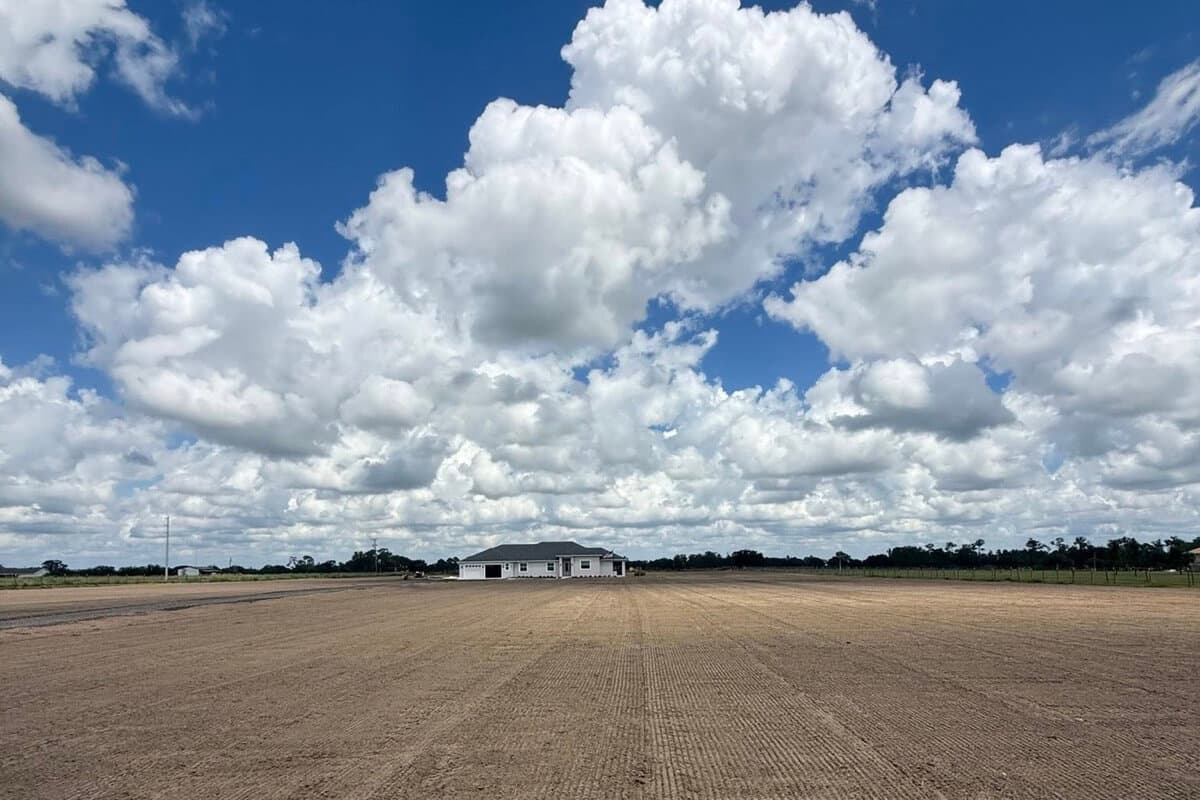
If you're planning to build in Hillsborough County, one of the biggest mistakes you can make is jumping straight into construction without properly preparing the land. Site prep is what determines whether your project runs smoothly or turns into a costly headache — done right, it sets the foundation for everything that comes after, literally.
Whether you're building a home, shop, or commercial space, this guide walks you through exactly what should happen before construction starts, and why it matters on Hillsborough County's sandy, flat, rain-heavy terrain.
What Site Prep Actually Includes
Site preparation is everything that happens before the first foundation is poured. It includes:
- Clearing vegetation and debris
- Removing trees, stumps, and roots
- Grading and leveling the land
- Establishing proper drainage
- Preparing building pads or surfaces
- Creating access points (driveways, entry paths)
Think of it as turning a raw piece of land into a build-ready site.
Why Site Prep Matters More Than Most People Think
A lot of property owners focus on the structure — the house, the building, the layout. But the reality is simple: if the ground underneath isn't right, nothing on top of it will be either.
Poor site prep can lead to water pooling around your foundation, soil shifting or settling, cracked slabs, drainage problems during heavy Florida rain, and expensive fixes after construction has already started. In a place like Hillsborough County — sandy soils, heavy rain, flat terrain — getting this right is critical.
Step 1: Land Clearing
The first step is removing anything in the way: trees, brush, palmettos, thick vegetation, and debris. Depending on the property, this might involve forestry mulching, full land clearing, or selective clearing that preserves certain trees.
Clearing also exposes elevation changes, drainage patterns, and problem areas you couldn't see before — which is why it has to happen first.
Step 2: Stump and Root Removal
This is where many people cut corners and regret it later. After clearing, what's left underground matters just as much as what was above it. Stumps, root systems, and buried organic material all need to come out.
If left in place, they can:
- Decay and cause soil to collapse
- Create voids under your foundation
- Lead to uneven settling over time
If you're building anything permanent, this step is not optional.
Step 3: Grading and Leveling
Once the land is cleared, it needs to be shaped correctly. Precision grading involves leveling the ground, adjusting elevation, and creating slopes for drainage.
In Hillsborough County, this matters more than most people realize. Because the terrain is relatively flat, even small grading mistakes can cause standing water, poor runoff, or flooding near structures. Proper grading ensures water flows away from the building, the foundation sits on stable ground, and the site is usable and accessible.
Step 4: Drainage Planning
This is one of the most overlooked — and most important — parts of site prep. Florida weather isn't forgiving, and heavy rain exposes bad drainage immediately.
Drainage solutions may include:
- Swales (shallow drainage channels)
- Retention areas or ponds
- Proper slope away from structures
- Culverts or water flow paths
Without proper drainage, water pools around your foundation, soil erodes or shifts, and you may run into compliance issues later. Drainage isn't a "nice to have" — it's critical for long-term stability.
Step 5: Building Pad Preparation
Before construction starts, you need a solid, stable surface to build on — the building pad. This involves compacting soil, bringing in fill dirt if needed, and creating a level, stable base.
A poorly prepared pad leads to foundation cracks, uneven settling, and structural issues over time. A properly built pad ensures even weight distribution, long-term stability, and a smoother construction process for whatever is going on top.
Step 6: Access and Entry Preparation
Before construction crews can even start, they need a way onto the site. That may mean clearing an entry path, installing a temporary or permanent driveway, and stabilizing access points for heavy equipment. Without proper access, equipment damages the property, work gets delayed, and costs climb fast.
Step 7: Permits and Local Considerations
In Hillsborough County, site prep isn't just physical work — there are also regulations to be aware of. Depending on your project, you may need tree removal approval, land alteration permits, environmental review, or stormwater compliance.
The level of work determines what's required. Simple clearing may not need much, but full site prep for construction usually does. Check requirements early so you don't hit delays once work starts.
Common Site Prep Scenarios
Residential home build: Full clearing, stump and root removal, grading and drainage, building pad prep.
Commercial development: Large-scale clearing, heavy grading and leveling, engineered drainage systems, access roads.
Adding a shop or structure: Partial clearing, pad prep, minor grading.
Vacant lot prep for sale: Bush hogging or light clearing, basic grading for appearance.
The Biggest Mistake Property Owners Make
The most common issue is underestimating site prep — or trying to skip steps to save money. This almost always leads to rework during construction, delays, and higher long-term costs. Fixing bad site prep is always more expensive than doing it right the first time.
How Long's Land Management Handles Site Prep
We approach site prep with the full picture in mind — not just clearing land and walking away. We look at your end goal, soil and terrain conditions, drainage and water flow, access and usability, and long-term stability.
Then we handle clearing, grading, drainage setup, building pad prep, and site access so that when construction starts, everything is ready to go.
Not Sure What Your Property Needs?
Every property in Hillsborough County is different. If you're not sure what needs to happen before construction starts, we can walk the site and give you a clear plan. Reach out to Long's Land Management for a site evaluation — no guesswork, just a properly prepared foundation for your project.