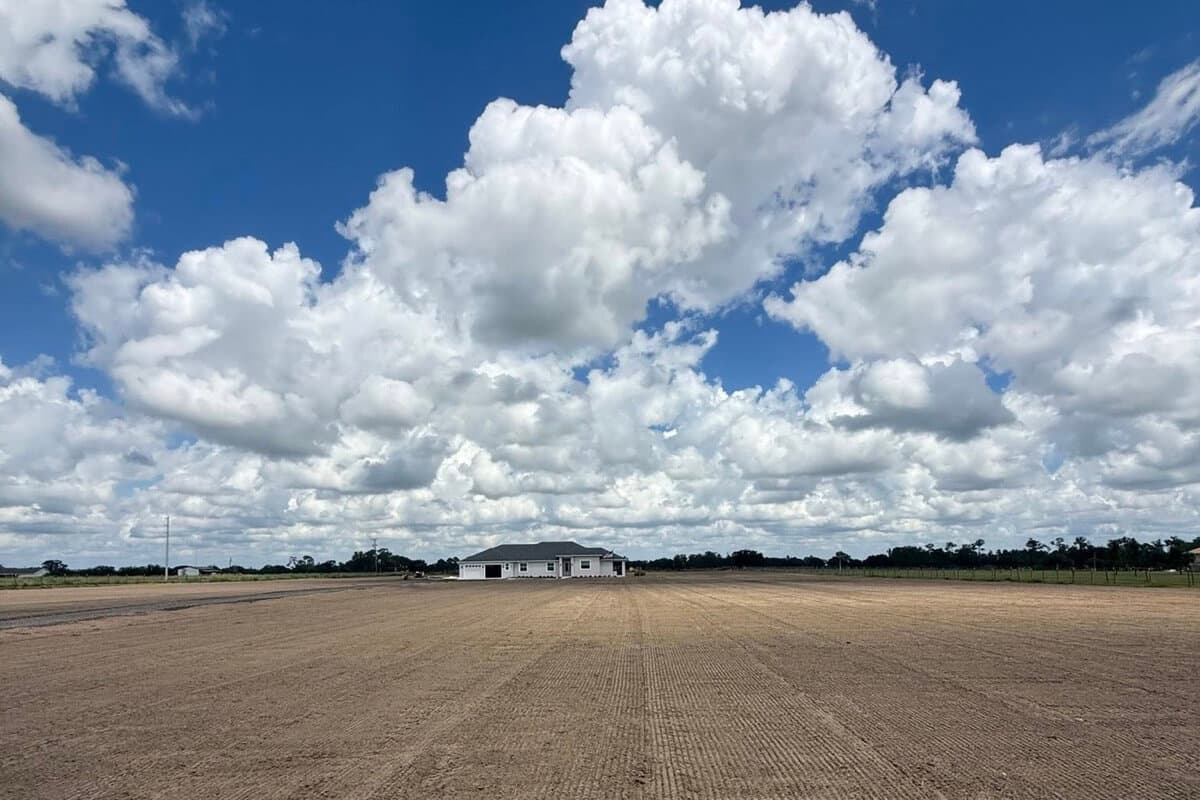
Forestry mulching cost in Auburndale, FL is driven by the same three things everywhere — lot size, how overgrown it is, and how easy it is to reach — but Auburndale has one quiet advantage that often works in your favor: access. A lot of the parcels here sit along or near the I-4 corridor with real road frontage, and a property crews can drive equipment straight onto is faster and cheaper to mulch than one tucked deep behind other land.
If you're reading this, there's a good chance you just bought a lot — or are about to — and it's swallowed in brush. Auburndale's growth between Lakeland and Winter Haven means a lot of these in-between parcels change hands overgrown. Here's what forestry mulching one of them actually costs, and how to do it without spending money twice.
Why Auburndale Lots Often Mulch on the Cheaper End
Cost on a mulching job is mostly a function of time, and time is shaped by what the crew has to deal with before the machine even starts cutting. Auburndale's typical lot helps on two fronts:
- Access is usually good. Corridor and subdivision-adjacent parcels tend to have road frontage and room to maneuver. No long approach, no crossing someone else's land, no winching equipment into place.
- Parcels are often modest in size. A lot of the work here is residential and small commercial — a manageable acreage rather than a sprawling back-forty.
That doesn't mean every lot is cheap. A parcel packed with mature trees, or a low/wet section, still costs more because the machine slows down. But all else equal, an accessible Auburndale lot is one of the more affordable mulching jobs we quote.
It's also worth noting that the corridor mixes residential and commercial parcels, and the two don't always price the same. A commercial lot is often larger and may need more of it cleared edge-to-edge for parking, drainage, and setbacks, while a residential lot might only need the building envelope and a yard opened up. The work scales with how much of the acreage you actually need touched — not the zoning on paper.
Just Bought an Overgrown Lot? Start Here
The most common call we get in Auburndale is some version of "I closed on this lot, I can't even walk it, what now?" The honest first step is to figure out what you're actually going to do with it, because that decides whether mulching is the whole job or just the start:
- Want it usable, walkable, and maintained? Mulching alone usually gets you there. The growth is ground into a mulch layer on the spot, and you can see and use your land within a day or two.
- Planning to build a house or a commercial pad? Mulching is step one. You'll still need site prep and grading afterward to level the ground and handle drainage.
Knowing this up front is what keeps you from paying twice — clearing the wrong way for your goal is the most expensive mistake a new lot owner makes.
A Rough Cost Ladder (Without the Sales Pitch)
We don't quote real numbers without seeing a property, but it helps to understand where a lot falls on the scale. From cheapest to most expensive to mulch:
- Light — pasture grass, weeds, saplings, scattered brush. Fast, single pass, lowest cost per acre.
- Moderate — dense underbrush, some young trees, grown-over fence lines and old landscaping. The bulk of Auburndale residential lots land here.
- Heavy — mature, closely spaced trees and thick canopy, or large-diameter trunks. Slower going, more passes, highest cost — and at the top end, some trunks may be too big to mulch and need full land clearing instead.
Layer access and ground conditions on top of that ladder: an easy, dry lot prices toward the bottom of its tier; a wet or awkward one toward the top.
Mulching Now vs. Paying Twice Later
Here's the trap we see along the corridor: a buyer clears a lot fast and cheap to "see what they've got," then learns the method they paid for doesn't match what they're building. Brush gets knocked down but stumps are left where a foundation needs to go, or the lot gets scraped bare when mulching would have done the job for less and left healthier soil.
The fix is simple — decide the end use first, then clear once, the right way. If it's recreation, maintenance, or just making the lot usable, mulching is the efficient, lower-cost answer. If it's construction, plan the mulching and the grading as one sequence so nothing gets undone.
If you've got a new or overgrown lot in Auburndale or anywhere along the I-4 corridor in Polk County, the next move is a free, no-pressure look. We'll walk the parcel, ask what you're building or using it for, and give you a straight price for the work that actually fits — call (813) 393-8359.