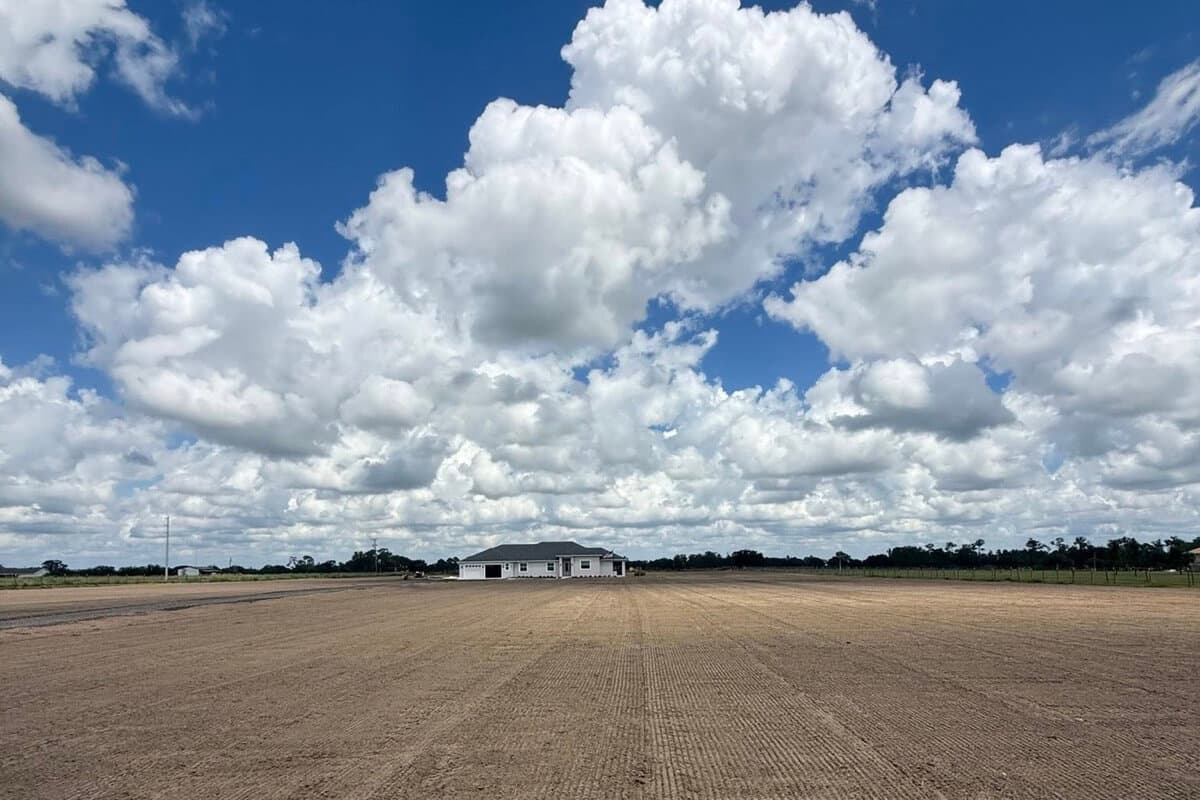
Building a horse arena isn't just about leveling land and putting up fencing — it's about creating a safe, durable, and functional space that performs in Florida's unique conditions. If you're planning an equestrian arena in Hillsborough County, understanding the process from land clearing to final footing is critical to getting it right the first time.
This guide breaks down the essentials so you can avoid costly mistakes and build an arena that lasts.
What Goes Into Building a Horse Arena
A properly built arena includes several key components, and each layer plays a role in performance, safety, and long-term maintenance:
- Land clearing and site preparation
- Grading and leveling
- Drainage system installation
- Base layer construction
- Footing material installation
- Perimeter fencing
Step 1: Land Clearing and Site Preparation
Everything starts with the land. Before construction begins, the area must be:
- Cleared of trees, brush, and debris
- Stripped of organic material (roots, topsoil)
- Evaluated for drainage and elevation
👉 Poor prep leads to uneven footing, standing water, and long-term structural issues. On large acreage in areas like Lutz and Plant City, this phase often involves multiple equipment passes to get the pad truly construction-ready.
Step 2: Grading and Drainage (Critical in Florida)
Drainage is one of the most important — and most overlooked — parts of arena construction. In Hillsborough County:
- Sandy soils can shift
- Heavy rains can flood low areas
- Flat land can trap water
A proper build includes a slight slope for water runoff, a compacted subgrade, and drainage planning before base installation.
💡 Skipping this step is one of the most expensive mistakes you can make. Once footing is installed over a bad drainage plan, fixing it usually means tearing out layers and starting over.
Step 3: Building the Arena Base
The base is what supports everything above it. Typical base construction includes:
- Compacted soil sub-base
- Crushed concrete or limestone layer
- Laser grading for precision
This layer ensures stability, a consistent riding surface, and proper drainage through the system.
Step 4: Choosing the Right Footing
Footing is the top layer your horses actually perform on — and it matters more than most people realize.
Common Footing Types
| Footing | Best For |
|---|---|
| Sand (most common in FL) | General riding, good drainage |
| Sand + fiber blends | Jumping, dressage, added stability |
| Clay/sand mixes | Western disciplines, reining |
What Good Footing Does
- Provides traction
- Reduces injury risk
- Maintains consistency across the arena
👉 The wrong footing can lead to uneven wear, poor performance, and increased maintenance costs. For a deeper look at why the base beneath the footing matters more than the footing itself, see our guide on arena footing, drainage, and site prep.
Step 5: Fencing and Layout
A well-built arena isn't complete without proper enclosure. Common options include:
- Wood fencing
- Vinyl fencing
- No-climb wire with top rail
You'll also want to consider:
- Arena size — Common: 100x200 ft for general use, 120x240 ft for dressage or jumping
- Entry points and gates — Place them where equipment and horses naturally flow
- Future expansion — Leave room for a round pen, warm-up area, or covered section
Common Mistakes to Avoid
❌ Skipping proper base work — Leads to uneven surfaces and costly repairs.
❌ Ignoring drainage — Creates standing water and unusable footing after Florida's heavy rains.
❌ Choosing cheap materials — Short-term savings turn into long-term problems and early replacement.
❌ Not planning for maintenance — Every arena requires upkeep. Build with drag equipment, water trucks, and access paths in mind.
What Most Property Owners Don't Expect
Many properties in Hillsborough County look ideal — but once construction begins, hidden issues appear:
- Soft or unstable soil under what looked like solid ground
- Elevation inconsistencies across the pad
- Drainage challenges that only show up after the first heavy rain
👉 A proper site evaluation upfront prevents these surprises.
Build It Right from the Start
A horse arena is an investment — and the quality of the build directly impacts safety, performance, and long-term cost.
At Long's Land Management, we handle every phase of horse arena construction for property owners across Hillsborough County — from Tampa and Lutz to Plant City and Riverview. Our services include land clearing, site prep and grading, base construction, footing installation, and fencing and layout.
If you're planning an equestrian arena, start with the right team. Request a quote or schedule a site visit to get a clear plan for your arena project.